Thai green curry chicken is a complex mix of flavors that takes Thai food's normal complex balance of sweet, salty, acidic and spicy and adds more complexity with herbal and earthy character. The key to any curry is the curry paste and a long (for Thai food) cook. This recipe requires you to make curry paste although you can buy them pre-made, even at American supermarkets. I have tried using commercial curry pastes and I have not been happy with the results. I know that many Thai recipe bloggers insist you must use commercial curry pastes unless you have access to authentic ingredients but I partially disagree. There are probably better commercial pastes out there than what I have tried but what I have tried has been pretty bad. I would rather substitute one or two ingredients for something close than use the bland pastes I have tried. My green curry paste recipe (below) is mostly authentic ingredients with a few slight domestic substitutions. Again, authentic substitutions will be presented at the bottom of the recipe.
Thai Green Curry Paste Rules
The green curry paste recipe below makes approximately one cup of paste. You will only need a small portion but the great news is that this recipe freezes very well. I have some that has been in my freezer for about a year and although it has slightly browned it still tastes and smells good. I don't necessarily recommend holding onto it that long because you will lose some of the delicate aromatics but it will survive and it is worth using. You can make less paste if you want.
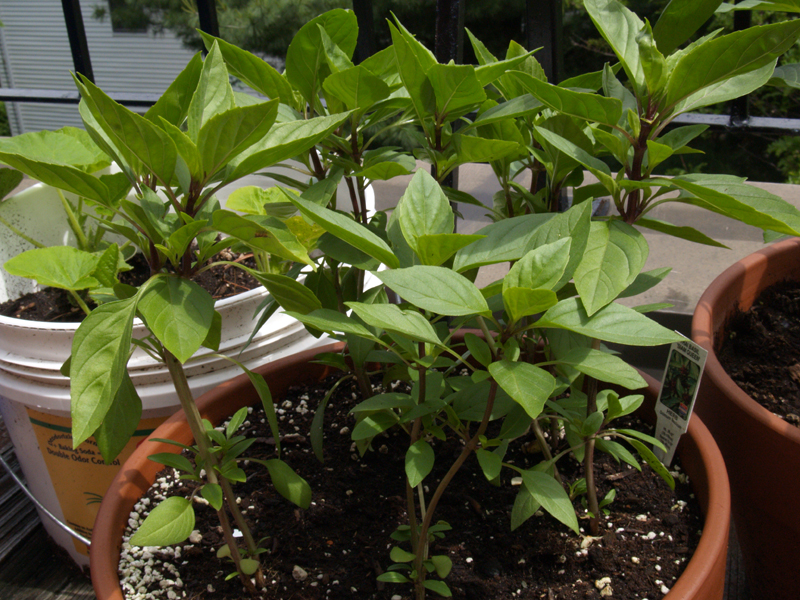 |
| Young Thai basil |
The good news is that Thai basil can be found at nurseries to grow and it is very easy to grow. It isn't temperamental like Italian basil. You just need to water it a little and let it go. It loves hot summers and grows prolifically. Plus, it will drop so much seed if you let the flowers bloom that you will get new basil plants each year. It will grow inside very sluggishly. You will be much happier growing it outdoors. I have overwintered it indoors and had 50/50 luck at bringing it back to life in the spring. If you can't grow it then you should be able to find leaves at Asian grocers along with the other ingredients you will need.
One seemingly universal ingredient in curry paste is ground shrimp paste. (It's exactly what it sounds like.) It provides a umami taste and adds to the pasty texture. You won't find it in this recipe but I'll discuss including it in the substitution section below. I have some disagreement about the necessity of using ground shrimp paste. You should use it if you can find it but your curry won't be ruined if you can't find it. There are a lot of flavors in this dish and the ground shrimp paste brings an umami richness to the food rather than a particular taste. However, the difference this ingredient makes will not make or break the dish. I believe the particular flavor of Thai bail is far more important.
Some General Helpful Tips
If you are making the green curry paste then you are looking at approximately 1-1.5 hours depending upon how efficient you are at chopping. The actual cooking takes approximately 25 minutes so you can prepare the paste and chop all ingredients ahead of time.
One thing that will help keep the cook time under control (and generally make the dish more enjoyable to eat) is to chop the meat into small, bite-sized pieces. The smaller the pieces of meat, the quicker it will cook through. If you are using chicken breasts you can partially freeze the meat before chopping, which makes it easier to work with. You can do the same with chicken thighs but you probably want to remove the fat, skin and bone before freezing.
The easiest way to make this paste is with a food processor. An immersion blender would be ok but you will have a tough time with a standard stand blender. Your paste should be just that: a paste. This recipe will be a little more liquid-ish than the pastes you buy at the store (I'll explain why in the substitutions section) but it shouldn't be soupy. That's a problem for a stand blender because it isn't designed to mix ingredients without a decent volume of liquid to move the dry ingredients around the blades to get an even texture. You can use a mortar and pestle, which will give you the most pasty texture, but that is a lot of time devoted to mashing up vegetative matter.
If, like me, you are allergic to coconut then you unfortunately may be cut out from a lot of delicious Thai food. I have made this recipe with soy milk instead of coconut milk. It works but the soy milk will make a thicker curry and it lacks the sweet fragrance of coconut. I find coconut milk does not trigger an itchy reaction when it is cooked so I do not have a problem using coconut milk myself. However, do not rely upon my experience to guide your medical decisions. It could be fatal.
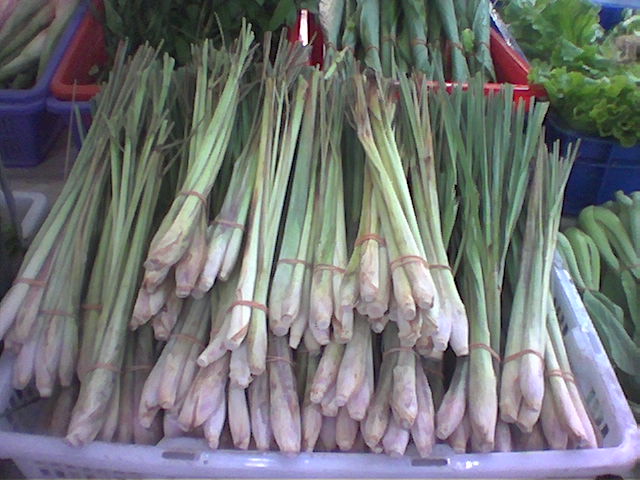 | |
| Lemongrass |
I use a wok to cook this dish but I cook on an electric stove. It doesn't cook anywhere near as fast as a propane grill or other wok stove that burns very hot. The cook times listed below are for use on a regular kitchen stove. If you are cooking over a more powerful cooking element then I would suggest dialing down the cook times. If you are cooking on a stove but you do not have a wok then do not worry. A stock pot or dutch oven will be an acceptable substitute. You just need something that can handle the volume of food you are cooking and survive your stove turned to high.
Curry is often served with rice, so don't forget to prepare some rice to eat with the curry. You don't have to eat rice with it but I enjoy jasmine rice with the curry served over it so all the deliciousness soaks into the rice.
Whew, ok, enough. Let's get to cooking.
Green Curry Paste Recipe
Makes 1 cup of pastePrep time: 10-15 minutes
Cook time: 0 minutes
Equipment required:
- Cutting board and knife
- Measuring cups and spoons
- Food processor or blender (or mortar and pestle)
- 3 tbsp lemongrass, finely chopped
- 3 jalapenos, roughly chopped
- 1/2 red onion, diced
- 4 cloves of garlic, peeled
- Thumb-sized piece of garlic, peeled and roughly chopped
- 1/2 cup cilantro, roughly chopped
- 1/2 cup Thai basil leaves
- 1/2 tsp cumin
- 1/2 tsp pepper
- 1/2 tsp ground coriander (can use whole if preferred)
- 3 tbsp fish sauce
- 1 tbsp soy sauce
- 1/2 tsp salt
- 2 tbsp lime juice
- 1 tsp brown sugar
- 3 tbsp coconut milk
- Prepare all vegetables and herbs
- Add all ingredients to food processor and process until smooth
Thai Green Curry Chicken Recipe
Makes 6-8 servingsPrep time: ~30 minutes
Cook time: ~30 minutes
Equipment required:
- Wok or pot sufficiently sized to cook ingredients
- Knife and cutting board
- Stove/propane burner
- Spatula or other utensil to stir food
- Ladle or other utensil to serve food
- Measuring spoons and cups
- 1 tbsp oil (needs an oil that doesn't burn at high heat like olive oil; grapeseed oil is a good choice)
- 1/2 red onion, diced
- 8 chicken thighs, chopped or 4 chicken breasts, chopped
- 3 tbsp green curry paste
- 16 ounces coconut milk
- 3 tbsp fish sauce
- 1 tbsp brown sugar
- 2 cups Thai basil leaves
- 2 serrano peppers, thinly sliced (adjust appropriately for the desired level of heat)
- Thumb-sized piece of ginger, peeled and grated
- Zest from 2 small limes, finely chopped
- Quarter de-zested limes
- 1/2 cup cilantro, chopped
- 1 tbsp lemongrass, sliced
- Leftover lemongrass greens
- Prepare herbs, vegetables and chicken
- Heat oil in wok on high heat
- Add 1 cup coconut milk and curry paste. Cook 5 minutes, stirring frequently
- Add chicken and onion and mix well. Cook 5 minutes, stirring frequently
- Add remaining coconut milk, fish sauce, brown sugar, lime zest, 1 cup Thai basil and lemongrass greens
- Cook for 9 minutes
- Add ginger, cilantro and lemongrass. Cook 1 minute.
- Add remaining 1 cup Thai basil and serrano. Turn off heat and mix well. Remove lemongrass greens.
- Serve with rice and offer lime slices to squeeze over top.
- Assemble all your ingredients before you start cooking. You don't want to let the curry cook too long while you try to find and measure each ingredient.
- Taste the dish after you add the ginger, cilantro and lemongrass. You may need to adjust the flavors by adding more salt (add more fish sauce), more acidity (add lime juice), or more sweetness (add more brown sugar). Try to do this step quickly because prolonged heat will drive off some of the aromatics of the herbs.
- You can add vegetables to the curry. Eggplant works well but you can add pretty much anything you normally find in Thai food.
- You can also swap out meats. Chicken breasts will make the healthiest version but I like using thighs because you get a much richer chicken flavor. If you remove the excess fat and skin they are reasonably healthy. But you can also use different proteins entirely, such as pork, shellfish, fish meatballs and so forth. I don't think beef works as well with green curry as it does other curries.
Substitutions for more/less authentic curry
Let's get the less authentic substitution out of the way because there is only one: if you cannot find lemongrass then you can use lemon juice. Lemongrass is a delicate lemon-floral flavor without the acidity or punch of lemon juice, so it is a different flavor but you are using so little that you can get by with the lemon juice. Use a 1:1 substitution.Now, here are some substitutions to make the dish more authentic:
Shrimp paste in the curry paste: Like I said above, shrimp paste is added more for its umami effect than particular flavor so it is not a do-or-die ingredient. You get some of that same umami character from fish sauce and soy sauce but it isn't quite the same. If you can find shrimp paste I encourage you to try it. Use 3 tablespoons for the 1 cup recipe.
Chile substitutions: Jalapenos are obviously not native to Thailand but they do a reasonable job of emulating the unique character of Thai chiles. Thai chiles are hot and very earthy/pungent. Jalapenos are earthy but not as boldly pungent. If you can find Thai chiles I recommend their use. Substitute Thai chiles at the same volume, which will be roughly 2 large Thai chiles for 1 jalapeno.
You can also use Thai chiles instead of serrano in the curry but I actually prefer the serrano in the curry. Serranos are hotter than jalapenos but they have a less noticeable flavor, which allows them to bring heat to the dish but let all those delicious herbs shien through.
Using two serranos makes this dish very hot. I love the flavor and heat but I also pour sweat while loving it. You may find that is too much heat. Use less if you want a milder dish (obviously). I do not suggest using a milder pepper because milder peppers tend to be more vegetal in flavor and will change the taste. Just use less serrano.
Shallot: Typically you want to use shallot instead of red onion in Thai food. You can and probably should use shallots but sometimes I have a tough time finding shallots at the store or they are ridiculously priced. I do not find the difference shallots make so important to justify using the more expensive ingredients. You are cooking down the shallot so you aren't getting as much of the sweet and fragrant character of shallots that you do not get with onion. If you prefer using shallot, use whatever amount of shallot you find is equal to the size of half a red onion (usually 1-2 shallots).
Galangal: Galangal is sometimes sold as Thai ginger or Chinese ginger. It is related to regular ginger but it has a bolder flavor and it is harder to cut. The flavor is similar but less assertive. If you can find galangal then you should use it but if you can't find it then you will be fine using ginger. Substitute 1:1.
Kaffir lime leaves: Kaffir limes are a little different from the limes you normally find in the store. One major difference is that the leaves of the tree are used in cooking, perhaps even more than the fruit itself. The flavor is limey but with a citronella note to it that makes it pungent. Kaffir lime leaves are the authentic ingredient in curry paste, rather than the lime juice used above. If you can find kaffir lime leaves then you definitely should use them. Use in a 1:1 substitution.
Kaffir limes: Similarly, if you can find kaffir limes then you should use them in this recipe instead of the smooth limes you buy in most grocery stores. Also use in a 1:1 substitution.
Palm sugar: Brown sugar isn't a traditional Thai ingredient. The typical sugar used in Thai food is palm sugar, sometimes sold as jaggery, which is an unrefined sugar with a mellow molasses/caramel flavor. American brown sugar is refined sugar sprayed with molasses so it sort of emulates the flavor of palm sugar. If you can find palm sugar then use it. Otherwise you will be ok in this dish using brown sugar because you don't use very much in the curry. Use in 1:1 substitution.

No comments:
Post a Comment