Tuesday, August 26, 2014

Not Healthy: Duck with Maple Rosemary Glaze

I love duck. It's my favorite poultry. Rich, gamey and awesome almost any way you serve it (except dried out). It's not a particularly unhealthy food but it is a fatty bird so I went ahead and listed this recipe as unhealthy. The breasts are actually very lean once you get past that thick layer of external fat but much of the rest of the bird is fattier meat. It pairs incredibly well with fruit (I have a duck breast in berry sauce recipe to post later) but also works wonderfully with savory herbs, such as in this recipe. The origin of my version of this recipe can be found here.

Duck is expensive protein but you can get a lot out of buying a whole bird. For this reason I usually only cook duck once or twice per year (it is a Valentine's Day tradition) but you can get quite a bit of value out of buying a whole duck. The leftover skin, bones and fat can and most definitely should be repurposed to make a fantastic duck stock (recipe here) and the thick layer of fat that will form on the stock when you freeze it can be used in place of oil or butter to fry or flavor other dishes (especially potato dishes). Frozen ducks usually come with the organs which can be fried up as tasty snacks or turned into various other dishes. I eat the kidneys, heart and liver gently pan-fried but leave the gizzards and neck for soup.

Duck can be hard to find but not impossible. I usually find one or two ducks hanging out in the frozen poultry section of my local grocers but around the holidays it gets more difficult to track down. Some high end grocers will carry duck breasts (and they are often quite large breasts) but those are best pan fried rather than roasted. If you have Asian grocers available then that is also a good place to check. If you plan on cooking duck then you should start checking grocers weeks in advance to make sure you have one available.

Roasting a whole duck is not particularly difficult. Like any other poultry, you really only need to worry about not overcooking it. It is more forgiving than most birds because the thick fat layer helps avoid overcooking and drying it out but you still want to be vigilant in not overcooking it. One unique trick to roasting duck is dealing with the thick layer of fat. You want to score or prick the fat (but not into the meat) to expose it under the skin and make sure it leaks out as it renders rather than cooking into the meat which can produce a greasy meat. This recipe in particular is light on ingredients and technique so it is approachable even for a new home cook.

Roasted Duck with Maple Rosemary Glaze

Equipment:

  • Cake pan large enough to fit duck (9x13 is usually a good size)
  • Measuring cups and spoons
  • Cutting board
  • Carving knife
  • Foil (optional)
  • Thermometer (optional but recommended)
  • Kitchen timer
  • Oven
  • Stove
  • Saucepan
  • Kitchen twine

Ingredients:

  • 1 5-5.5 pound duck (can do larger if that is what is available but adjust other ingredients accordingly)
  • 1 medium white onion, chopped
  • 1 apple chopped (basic red apple is fine)
  • 1/2 cup maple syrup
  • 2 tbsp apple juice
  • 1 tbsp butter
  • 1 shallot, diced
  • 1 tbsp fresh rosemary, diced
  •  Extra rosemary sprigs (optional)
  • 1/2 tsp  salt
  • 1/2 tsp cayenne pepper
  • 1/2 tsp pepper

Recipe:

  1. Thaw duck overnight. 
  2. If duck is bought with innards and/or sauce packet, remove everything from duck. Feel free to use these items elsewhere or save for later.
  3. Wash duck thoroughly. Make sure there is no frozen portions inside. If so, run lukewarm water through the duck until thawed.
  4. Preheat oven to 350F.
  5. Chop vegetables and assemble other ingredients.
  6. Trim excess skin around the neck cavity leaving an inch or two to fold under duck and close the neck cavity. Discard removed skin.
  7. Score or prick the skin and fat all over, being careful not to cut into the meat.
  8. Stuff body with chopped onion and apple. If you have extra rosemary springs then you can add one or two to the cavity with the onion and apple.
  9. Fold the tail up and bind the legs together with twine to seal the cavity shut. 
  10. Place duck in cake pan. If you prefer, you can line the cake pan with foil to make clean up easier. If you want even more rosemary flavor then you can place extra rosemary springs beside the duck.
  11. In saucepan combine the remaining ingredients except the extra rosemary sprigs and bring to quick boil. Reduce heat. Simmer 5-10 minutes until glaze thickens.
  12. Pour enough glaze on the duck to coat it. Make sure the duck is fully coated.
  13. Roast for approximately 30 minutes per pound. After one hour, add the remaining glaze to the duck and return to the oven for continued roasting.
  14. Check temperature at the thigh. At 175F the duck is done cooking. 
  15. Let rest for 5-10 minutes. Remove the onion and apple.
  16. Carve the duck. The breasts are usually the best parts so be careful to remove each breast in its entirety. 
  17. Remaining pan drippings, bones and fat should be used to make stock after the meal. 

Optional alterations:

  • You can use lite maple syrup in place of regular maple syrup. It's usually made from corn syrup and flavored with fenugreek, which has a maple flavor. The corn syrup will caramelize just the same and the maple flavor will stay intact. It's not as good but it is a way to knock off some of the sugar content and some of the calories. 
  • You can add other fruit or vegetables to the body cavity. Orange is a suitable fruit. I would stick with other vegetables similar to onions, such as leeks and shallot. You can use red or yellow onion instead of white onion.  Stick with flavors complimentary to rosemary and maple.
  • You can also add other herbs to round out the herb flavor. Typical poultry herbs like sage and parsley work although the distinct rosemary flavor is my preference.

Serving suggestions:

  • One duck is supposed to be four servings but since I rarely cook duck we tend to eat most of the meat between my wife and I so we usually get 3-4 servings depending on the duck. So plan accordingly for your diners.
  • My preference is to serve this dish with a risotto. I like lemon risotto to cut the sweetness with some acidity but an earthy risotto or fall/winter vegetable risotto would be good. 
  • Roasted potato, cauliflower puree, or other root vegetable dishes are also good starch sides if you want to stay away from rice or grain. Potato is probably the standard side dish for duck but don't feel like you have to commit to potato.
  • Green vegetables usually work well, such as green beans, asparagus or blanched greens.


Monday, August 25, 2014

Healthy: Smoked Turkey Meatloaf

This recipe is my absolute best smoker recipe although it is incredibly easy and almost impossible to screw up unless you really try. Like the title says, this recipe is for smoked turkey meatloaf. (I will explain later the issue with using ground beef.) Basically any meatloaf recipe can be smoked but this recipe is easily adaptable and combines big flavor with reasonable caloric intake.

Smoked meatloaf may sound unusual to people but it works really well, requires very little prep work and freezes incredibly well. Unlike most smoked meats, there is no brine to apply the day before or misting to keep it moist in the smoker. Ground beef has an even distribution of fat so as the fat melts it will keep the meat moist without needing to apply any liquid or sauce to the outside. The top layer will form a firm, smoky crust just like you want in the oven. Aside from getting a fire going in your smoker, there is no prep work involved in making these meatloafs except making the actual loafs and putting them in the smoker. I've had good luck keeping them in the freezer for weeks and come out with all the same smoky flavor.

Tips/Tricks/Considerations Before Preparing

You can use pretty much any smoking wood for your meatloafs. I like mesquite on everything and find it works extremely well here. Ground turkey is sort of bland on its own but it does an excellent job of soaking up other flavors so I wouldn't go with too mild of a wood. But use what you like. If you want an assertive flavor but temper the volume of smoke flavor you can always smoke the meatloafs for 15-30 minutes and then finish them in the oven.

You will also want to place the meatloafs in some sort of vessel before sending them to the smoker. There's a couple reasons why. First, you don't want the meatloaf to melt through the grating and get stuck on the grating or worse, fall through into the fire. Second, the meatloaf will ooze out a bit of grease and you probably don't want that draining into your fire. If you have a multiple-level smoker then you definitely don't want it dripping on other meats. The grease will help slow the cook down so the meat stays moist without making it too greasy. My preferred method is to make boats out of foil. I pull out a piece of foil and fold the edges inward to create stiff sidewalls. Then I twist the corners together to seal the boat. Works well and I can toss it out with the excess grease. I prefer this design where all sides are open to the smoke except the bottom for maximum smoke flavor.

I said I would talk about why beef is not recommended here. Of course, you can make meatloaf out of any ground meat and beef is the classic option. The problem you will have in this case is that beef, even extremely low-fat ground beef, will get really greasy. Usually you want that fat/grease to help slow the cook but you don't really need that with meatloaf. The bigger problem, however, is that the meat will stay greasy forever. I tried 90/10 beef once and ended up with meatloaf that was so greasy I could squeeze it out like a sponge. Tasted great (even better than the turkey) but I don't like greasy meat. Ground beef really needs that hotter cooking temperature to cook off the fat.

This recipe uses a fair amount of jalapeno for some spice. I usually smoke the jalapenos first and then chop them up to use in the meatloafs for some extra smoke. You don't have to do that but I like a lot of smoke flavor. I usually also serve the meatloafs with some BBQ sauce so that tempers some of the heat. Adjust the jalapenos up or down for your desired heat. You can also add or substitute other peppers. I also like to use hatch chiles with the jalapenos for a more complex pepper flavor.

Smoked Turkey Meatloaf Recipe

Equipment:

Smoker
Mixing bowl
Temperature probe
Measuring cups and spoons
Hands
Something to remove the meatloaf with (tongs are good here)
Timer/clock

Ingredients:

1 lb. 90/10 (or leaner) ground turkey
1/2 small onion, chopped
1 medium size jalapeno (optionally smoked beforehand), chopped (and deseeded, if you wish to temper the heat)
2 cloves garlic
1/2 tsp salt
1 tsp black pepper
1/4-1/2 cup egg substitute (or 1-2 eggs)
1 tbsp Worcester sauce
1/2-1 cup of bread crumbs
1/4 cup ketchup

Recipe steps:

  1. Prepare smoker.
  2. Chop vegetables. 
  3. Mix vegetables, ground turkey, garlic, salt, pepper, Worcester sauce, ketchup, 1/2 cup bread crumbs and 1/4 cup egg substitute (or 1 egg) in a large mixing bowl. Mix thoroughly until it forms a uniform consistency. Add more egg if too dry. Add more bread crumbs if too wet. 
  4. Divide into two halves. Form each half into a loaf and place in your foil boat. (Optionally you can add ketchup or BBQ sauce to the top of the loaf at the beginning or midway through smoking.)
  5. Place meatloaves in smoker. Remove when the internal temperature reads 160-165F. Typically takes 1-2 hours but will depend on the temperature of your smoker. If you have problems hitting the right temperature you can place the loaves in an oven at 375F until done cooking.
  6. Remove from boat and serve with BBQ sauce or ketchup.

Wednesday, August 20, 2014

Cookbook Review: Downtown Italian

Downtown Italian is a cookbook focusing on, yes you guessed it, Italian cuisine. It is written by three restauranteurs from New York City with recipes sections that include antipasti, pastas, main courses, side dishes, Italian-inspired cocktails and desserts. The authors include a sommelier, pasty chef and executive chef. It gives the end-to-end experience of the long Italian meal, complete with wine (and sometimes beer) pairings for each course. The recipes, as a whole, reflect popular trends in restaurants with an emphasis on fresh ingredients and their creative use. The authors claim that the ingredients and techniques used in these recipes have been simplified for accessibility to the home cook. I have mixed thoughts about this cookbook.

There's a lot to like here.

The recipes provide a range of recipes beyond the expected Italian dishes that normally fill a cookbook. Many Italian cookbooks I have come across look like the Olive Garden recipe guide or insist upon only using canned tomatoes and other vegetables to produce dense and heavy sauces that mask the canning acidity with an excess of parsley. These are the kind of dishes you would expect to find in an Italian restaurant advancing contemporary Italian cuisine. (So the shelf life of this book may be more limited than a book focusing on classic dishes.) The book accurately describes itself.


What I like most about the recipes is that most require you to build the dish from scratch rather than using pre-made, store bought ingredients along the way. It's usually quite difficult to find recipes that give you all of the steps to start from scratch. Often I find myself trying to piece together recipes and hoping each recipe not only accurately produces the ingredient but that it produces a variant that plays well with the ultimate dish. So, with that in mind, expect to spend some time putting these dishes together. The recipes will challenge you to cook with ingredients and techniques that may not be familiar to many home chefs (who didn't grow up in an Italian family).

The book is well constructed with clear recipe instructions and navigation. Chapters are well divided and there is little need to flip back and forth between sections to make a dish. The totality of the recipes work well together and you can easily pair the early meal sections together to feed a party, a single main dish for a regular meal, or go all out with a long-winded meal. The volume of recipes is on par with most cookbooks you find on the shelf. Every dish comes with a drink pairing suggestion or two, often with Italian wine or beer.

There are some things I didn't love.

The biggest issue with the cookbook is that many of the ingredients are not accessible to most home cooks, no matter where they live. Many of the recipes rely on delicious but hard to source proteins like octopus or boar. Ok, you can find these proteins in some places but I'm definitely not getting octopus in Dallas. Although boar is native to Texas it is still nearly impossible to find. Many people will have a hard time finding the ingredients required by the recipes and there are not great substitution suggestions with that in mind. I would encourage anybody considering this book to thumb through the recipes and figure out whether you can find the ingredients to make these dishes. Adding greater substitution suggestions would help make the book more flexible. Surely many of these recipes would work with more conventional ingredients even if that will require some seasoning adjustments.

The cocktail section is sort of a strange fit in the book. Several of the recipes are not particularly Italian in nature although they look good. Italian cordials are discussed and recipes are provided but they are mixed in with other recipes like "Texas Mimosa" which seem out of place. I would have liked to have seen more recipes featuring Italy's range of liqueurs or the whole section dropped in favor of more food recipes.

I feel like more recipes could have fit into the book but I'm generally underwhelmed by the current trend of shorter cookbooks with more pictures. That's not really this book's fault and it's not alone in this regard.


Overall I like the book and its theme but I would be hesitant to buy it just because I can't source many of the required ingredients (I received an advance copy to review). Definitely know what you are getting yourself into with the recipes and the ingredients. You aren't making "gravy" and store bought pasta here.


Tuesday, August 12, 2014

Book Review: Tamales by Alice Guadalupe Tapp

I received an advance copy of Tamales and thought it was worth giving a review. You can quickly figure out the content of the book from the title. You are about to get some tamale knowledge! Tamale is Ms. Tapp's second tamale book and focuses on an accessible approach to making tamales that encourages the use of simple steps and store-bought ingredients to produce tasty tamales. Ms. Tapp teaches tamale-making along the west coast and operates a restaurant that focuses on, yes, tamales. Her experience and expertise shines through this book.

I have a soft spot for Mexican and Americanized versions like Tex-Mex and Cali-Mex. I have two very specific memories of tamales as a child. My mother was adopted as a baby by a nice couple in 1950. My grandmother was Mexican but her family's lineage goes through Europe. (Their family is an interesting story for another time.) Although my mom was raised in California, after she graduated high school the family packed up and moved to Douglas, Arizona on the US-Mexican border. We didn't see our grandparents often (our family moved to Texas when I was three) but when we did we loaded up on delicious Mexican food brought across the border by my grandmother or her housekeeper. Among those delicious care packages were tamales. Moist masa and well-spiced pork. Even after weeks in the freezer they came out delicious. One time in 1990 we burned through our carefully enjoyed supply of authentic tamales. I convinced my parents to obtain more tamales at the grocery store, where apparently they were sold in cans. As a nine year old, a lot of my food came out of a can so I wasn't too worried. I should have been. What came out of the can were goopy, soggy, salty things that were like vienna sausages coated in chili powder and some type of grease. After that can it took a long time to trust tamales. (My grandparents passed on a few years later.) Somewhere in between the best tamales and the worst tamales of my life fall most tamales I have eaten since. The main criticism is that the masa is too dry and crumbly or too wet and soggy. A short second is that the filling is often bland and greasy. I have long desired to find the technique and recipes that would get me somewhere close to those magical tamales I ate as a kid. This might be it.

Tamales gives an extensive list of options for each key component of tamales and each type of tamale you can find. The components well explained with plenty of unique recipes include masa (the corn exterior), sauces/salsas and of course, the filling. Tamales offers more than just the usual pork tamale. There are all sorts of proteins from the easily available to those hard to find. There are vegetarian and vegan tamales as well as dessert tamales. Ms. Tapp offers explanation for several types of tamale presentations from varied corn husk and banana leaf wrapping techniques to inside out tamales where the filing is served on top or on the side of a solid masa roll that is gaining popularity in restaurants. The great thing about the diversity of recipes in this book is that you could spend a day preparing multiple tamales from this book and freeze them for weeks of eating without getting bored of eating the same thing.

Tamales keeps the recipes simple but flavorful. This book does a really good job of showing tamale making for the beginner with ingredients accessible at major grocery stores but producing delicious tamales. There are also helpful tips for important steps like how much masa and filing to use and how to figure out if the masa is ready by using basic kitchen tools or simple techniques that do not rely on experience to get it right. That is a nice way to avoid having to make a few test batches of failures to get the technique right. Those little tidbits pay for the book right there (which is why I'm not saying what they are). You can easily take these basic recipes to a more advanced level by subbing out the store-bought ingredients for your own homemade recipes. For example, the chicken mole poblano tamales call for store bought mole sauce but you could make your own far superior mole sauce for those tamales. Vegetables can be swapped out for heirloom varieties from your garden. Chiles can be swapped to make more complex sauces.

If there is one thing to criticize, it is the extremely short space spent explaining how to roll tamales. The book offers four pages of crude drawings showing ten different wrapping styles. The instructions are not especially clear but you can get a better sense of how to fill the wrapper for the different types of wrap styles by looking at some of the full size photos through the book. I would have liked to see a full chapter with photos of each step for each style as well as some helpful tips about wrapping. Rolling or wrapping in food prep requires both technique and experience. The more technique you know the less you have to rely on experience to figure it out. A few YouTube videos helped clarify but once you understand the way the book's illustrations are drawn then it makes more sense.

Overall, a great reference point for the new to moderately experienced tamale maker looking for recipes you can trust for each ingredient. There are so many good recipes and recipe combinations you can make out of this book that you could spend a lot of time developing your skills with tamales before you feel the need to branch out.

Healthy: Thai Green Curry Chicken

There are a lot of suspicious Thai recipes online and as I bemoaned here it is hard to look for a recipe that doesn't water down the flavor by using ingredients available at American supermarkets but promises to be more authentic than the most authentic dish you've ever had. So in the interest of honesty, this recipe straddles the fence between authentic ingredients and available ingredients. (I will give some substitutions on the more authentic and less authentic sides below.) I will say, this recipe is better than or as good as Thai green curry dishes I have been served in American Thai restaurants. So it's not too far off the mark. I will say up front that I believe the secret to good Thai food is using the correct ingredients but you will get satisfactorily close using the recipe presented here and even closer to something authentic if you follow the substitutions listed at the end of the recipe.

Thai green curry chicken is a complex mix of flavors that takes Thai food's normal complex balance of sweet, salty, acidic and spicy and adds more complexity with herbal and earthy character. The key to any curry is the curry paste and a long (for Thai food) cook. This recipe requires you to make curry paste although you can buy them pre-made, even at American supermarkets. I have tried using commercial curry pastes and I have not been happy with the results. I know that many Thai recipe bloggers insist you must use commercial curry pastes unless you have access to authentic ingredients but I partially disagree. There are probably better commercial pastes out there than what I have tried but what I have tried has been pretty bad. I would rather substitute one or two ingredients for something close than use the bland pastes I have tried. My green curry paste recipe (below) is mostly authentic ingredients with a few slight domestic substitutions. Again, authentic substitutions will be presented at the bottom of the recipe.

Thai Green Curry Paste Rules


The green curry paste recipe below makes approximately one cup of paste. You will only need a small portion but the great news is that this recipe freezes very well. I have some that has been in my freezer for about a year and although it has slightly browned it still tastes and smells good. I don't necessarily recommend holding onto it that long because you will lose some of the delicate aromatics but it will survive and it is worth using. You can make less paste if you want.
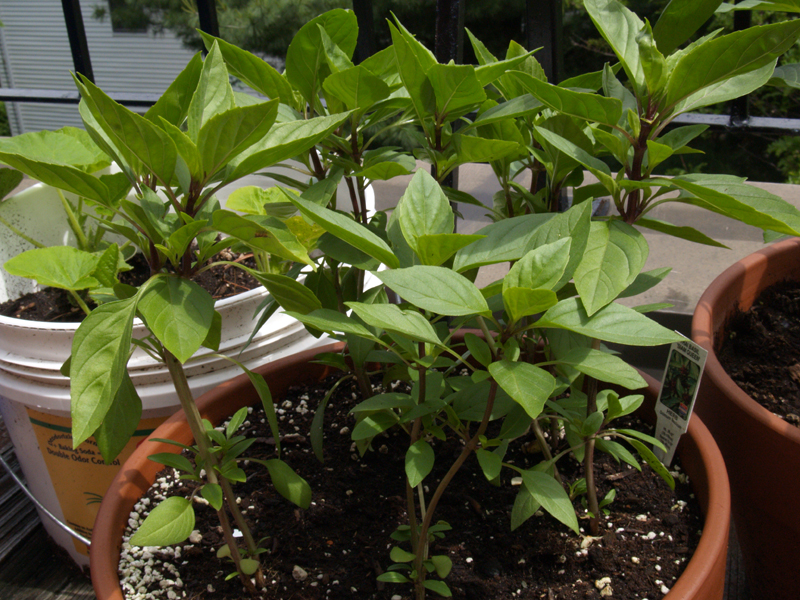
Young Thai basil
Although there are some substitutions for easily found ingredients in this recipe, one authentic ingredient is very important to the flavor of Thai green curry: Thai basil. Thai basil grows like a small shrub with tall flower stalks. It produces small leaves with the unmistakable basil flavor but while Italian basil is sweet, Thai basil has a strong anise (licorice) flavor. You could probably mix Italian basil with fennel seeds to get somewhere close but I think it would be noticeable. I have mixed fresh Thai basil with dried Italian basil when I ran low on Thai basil and it was ok but it's just not the same. This, in my opinion, is one of the key flavors to Thai green curry.

The good news is that Thai basil can be found at nurseries to grow and it is very easy to grow. It isn't temperamental like Italian basil. You just need to water it a little and let it go. It loves hot summers and grows prolifically. Plus, it will drop so much seed if you let the flowers bloom that you will get new basil plants each year. It will grow inside very sluggishly. You will be much happier growing it outdoors. I have overwintered it indoors and had 50/50 luck at bringing it back to life in the spring. If you can't grow it then you should be able to find leaves at Asian grocers along with the other ingredients you will need.

One seemingly universal ingredient in curry paste is ground shrimp paste. (It's exactly what it sounds like.) It provides a umami taste and adds to the pasty texture. You won't find it in this recipe but I'll discuss including it in the substitution section below. I have some disagreement about the necessity of using ground shrimp paste. You should use it if you can find it but your curry won't be ruined if you can't find it. There are a lot of flavors in this dish and the ground shrimp paste brings an umami richness to the food rather than a particular taste. However, the difference this ingredient makes will not make or break the dish. I believe the particular flavor of Thai bail is far more important.

Some General Helpful Tips


If you are making the green curry paste then you are looking at approximately 1-1.5 hours depending upon how efficient you are at chopping. The actual cooking takes approximately 25 minutes so you can prepare the paste and chop all ingredients ahead of time.

One thing that will help keep the cook time under control (and generally make the dish more enjoyable to eat) is to chop the meat into small, bite-sized pieces. The smaller the pieces of meat, the quicker it will cook through. If you are using chicken breasts you can partially freeze the meat before chopping, which makes it easier to work with. You can do the same with chicken thighs but you probably want to remove the fat, skin and bone before freezing.

The easiest way to make this paste is with a food processor. An immersion blender would be ok but you will have a tough time with a standard stand blender. Your paste should be just that: a paste. This recipe will be a little more liquid-ish than the pastes you buy at the store (I'll explain why in the substitutions section) but it shouldn't be soupy. That's a problem for a stand blender because it isn't designed to mix ingredients without a decent volume of liquid to move the dry ingredients around the blades to get an even texture. You can use a mortar and pestle, which will give  you the most pasty texture, but that is a lot of time devoted to mashing up vegetative matter.

If, like me, you are allergic to coconut then you unfortunately may be cut out from a lot of delicious Thai food. I have made this recipe with soy milk instead of coconut milk. It works but the soy milk will make a thicker curry and it lacks the sweet fragrance of coconut. I find coconut milk does not trigger an itchy reaction when it is cooked so I do not have a problem using coconut milk myself. However, do not rely upon my experience to guide your medical decisions. It could be fatal.
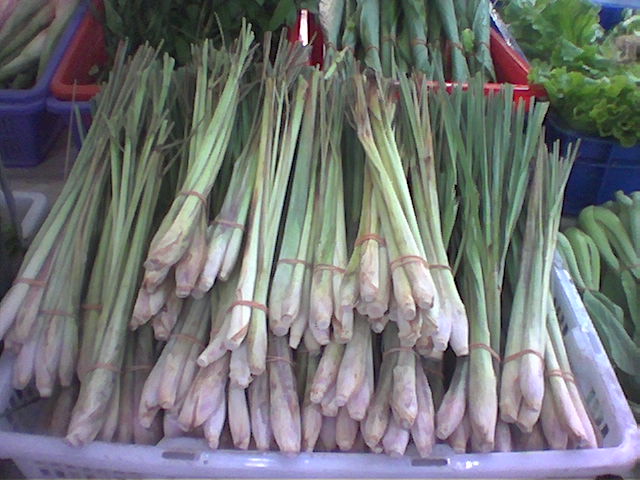
Lemongrass
Lemongrass can be found at some American supermarkets in either the produce section (usually with the fresh herbs) or possibly in the frozen foods (often with the organic frozen foods). It comes in stalks that look a little like asparagus picked too early. Preparing lemongrass for use is simple but you need to know how to prepare it to avoid getting unpleasant parts of the grass in your food.  You need to cut off the bottom of the stalk and pull off the dry outer leaves. Then slice the white part of the stalk for use in the curry and curry paste. The green part is a little more vegetal in flavor and less of the lemon-floral flavor of the white part. Keep the green parts because we will use them as well. When I list lemongrass as an ingredient I mean the white part and when I list lemongrass greens I mean the top of the stalks you set aside.

I use a wok to cook this dish but I cook on an electric stove. It doesn't cook anywhere near as fast as a propane grill or other wok stove that burns very hot. The cook times listed below are for use on a regular kitchen stove. If you are cooking over a more powerful cooking element then I would suggest dialing down the cook times. If you are cooking on a stove but you do not have a wok then do not worry. A stock pot or dutch oven will be an acceptable substitute. You just need something that can handle the volume of food you are cooking and survive your stove turned to high.

Curry is often served with rice, so don't forget to prepare some rice to eat with the curry. You don't have to eat rice with it but I enjoy jasmine rice with the curry served over it so all the deliciousness soaks into the rice.

Whew, ok, enough. Let's get to cooking.

Green Curry Paste Recipe

Makes 1 cup of paste
Prep time: 10-15 minutes
Cook time: 0 minutes

Equipment required:
  • Cutting board and knife
  • Measuring cups and spoons
  • Food processor or blender (or mortar and pestle)
Ingredients:
  • 3 tbsp lemongrass, finely chopped
  • 3 jalapenos, roughly chopped
  • 1/2 red onion, diced
  • 4 cloves of garlic, peeled
  • Thumb-sized piece of garlic, peeled and roughly chopped
  • 1/2 cup cilantro, roughly chopped
  • 1/2 cup Thai basil leaves
  • 1/2 tsp cumin 
  • 1/2 tsp pepper
  • 1/2 tsp ground coriander (can use whole if preferred)
  • 3 tbsp fish sauce
  • 1 tbsp soy sauce
  • 1/2 tsp salt
  • 2 tbsp lime juice
  • 1 tsp brown sugar
  • 3 tbsp coconut milk
Steps:
  •  Prepare all vegetables and herbs 
  • Add all ingredients to food processor and process until smooth

Thai Green Curry Chicken Recipe

Makes 6-8 servings
Prep time: ~30 minutes
Cook time: ~30 minutes

Equipment required:
  • Wok or pot sufficiently sized to cook ingredients
  • Knife and cutting board
  • Stove/propane burner
  • Spatula or other utensil to stir food
  • Ladle or other utensil to serve food
  • Measuring spoons and cups
Ingredients:
  • 1 tbsp oil (needs an oil that doesn't burn at high heat like olive oil; grapeseed oil is a good choice)
  • 1/2 red onion, diced
  • 8 chicken thighs, chopped or 4 chicken breasts, chopped
  • 3 tbsp green curry paste
  • 16 ounces coconut milk
  • 3 tbsp fish sauce
  • 1 tbsp brown sugar
  • 2 cups Thai basil leaves
  • 2 serrano peppers, thinly sliced (adjust appropriately for the desired level of heat)
  • Thumb-sized piece of ginger, peeled and grated
  • Zest from 2 small limes, finely chopped
  • Quarter de-zested limes
  • 1/2 cup cilantro, chopped
  • 1 tbsp lemongrass, sliced
  • Leftover lemongrass greens
Steps:
  • Prepare herbs, vegetables and chicken
  • Heat oil in wok on high heat
  • Add 1 cup coconut milk and curry paste. Cook 5 minutes, stirring frequently
  • Add chicken and onion and mix well. Cook 5 minutes, stirring frequently
  • Add remaining coconut milk, fish sauce, brown sugar, lime zest, 1 cup Thai basil and lemongrass greens
  • Cook for 9 minutes
  • Add ginger, cilantro and lemongrass. Cook 1 minute.
  • Add remaining 1 cup Thai basil and serrano. Turn off heat and mix well. Remove lemongrass greens. 
  • Serve with rice and offer lime slices to squeeze over top. 
Suggestions:
  • Assemble all your ingredients before you start cooking. You don't want to let the curry cook too long while you try to find and measure each ingredient. 
  • Taste the dish after you add the ginger, cilantro and lemongrass. You may need to adjust the flavors by adding more salt (add more fish sauce), more acidity (add lime juice), or more sweetness (add more brown sugar). Try to do this step quickly because prolonged heat will drive off some of the aromatics of the herbs.
  • You can add vegetables to the curry. Eggplant works well but you can add pretty much anything you normally find in Thai food. 
  • You can also swap out meats. Chicken breasts will make the healthiest version but I like using thighs because you get a much richer chicken flavor. If you remove the excess fat and skin they are reasonably healthy. But you can also use different proteins entirely, such as pork, shellfish, fish meatballs and so forth. I don't think beef works as well with green curry as it does other curries.

Substitutions for more/less authentic curry

Let's get the less authentic substitution out of the way because there is only one: if you cannot find lemongrass then you can use lemon juice. Lemongrass is a delicate lemon-floral flavor without the acidity or punch of lemon juice, so it is a different flavor but you are using so little that you can get by with the lemon juice. Use a 1:1 substitution.

Now, here are some substitutions to make the dish more authentic:

Shrimp paste in the curry paste: Like I said above, shrimp paste is added more for its umami effect than particular flavor so it is not a do-or-die ingredient. You get some of that same umami character from fish sauce and soy sauce but it isn't quite the same. If you can find shrimp paste I encourage you to try it. Use 3 tablespoons for the 1 cup recipe.

Chile substitutions: Jalapenos are obviously not native to Thailand but they do a reasonable job of emulating the unique character of Thai chiles. Thai chiles are hot and very earthy/pungent. Jalapenos are earthy but not as boldly pungent. If you can find Thai chiles I recommend their use. Substitute Thai chiles at the same volume, which will be roughly 2 large Thai chiles for 1 jalapeno.

You can also use Thai chiles instead of serrano in the curry but I actually prefer the serrano in the curry. Serranos are hotter than jalapenos but they have a less noticeable flavor, which allows them to bring heat to the dish but let all those delicious herbs shien through.

Using two serranos makes this dish very hot. I love the flavor and heat but I also pour sweat while loving it. You may find that is too much heat. Use less if you want a milder dish (obviously). I do not suggest using a milder pepper because milder peppers tend to be more vegetal in flavor and will change the taste. Just use less serrano.

Shallot: Typically you want to use shallot instead of red onion in Thai food. You can and probably should use shallots but sometimes I have a tough time finding shallots at the store or they are ridiculously priced. I do not find the difference shallots make so important to justify using the more expensive ingredients. You are cooking down the shallot so you aren't getting as much of the sweet and fragrant character of shallots that you do not get with onion. If you prefer using shallot, use whatever amount of shallot you find is equal to the size of half a red onion (usually 1-2 shallots).

Galangal: Galangal is sometimes sold as Thai ginger or Chinese ginger. It is related to regular ginger but it has a bolder flavor and it is harder to cut. The flavor is similar but less assertive. If you can find galangal then you should use it but if you can't find it then you will be fine using ginger. Substitute 1:1.

Kaffir lime leaves: Kaffir limes are a little different from the limes you normally find in the store. One major difference is that the leaves of the tree are used in cooking, perhaps even more than the fruit itself. The flavor is limey but with a citronella note to it that makes it pungent. Kaffir lime leaves are the authentic ingredient in curry paste, rather than the lime juice used above. If you can find kaffir lime leaves then you definitely should use them. Use in a 1:1 substitution.

Kaffir limes: Similarly, if you can find kaffir limes then you should use them in this recipe instead of the smooth limes you buy in most grocery stores. Also use in a 1:1 substitution.

Palm sugar: Brown sugar isn't a traditional Thai ingredient. The typical sugar used in Thai food is palm sugar, sometimes sold as jaggery, which is an unrefined sugar with a mellow molasses/caramel flavor. American brown sugar is refined sugar sprayed with molasses so it sort of emulates the flavor of palm sugar. If you can find palm sugar then use it. Otherwise you will be ok in this dish using brown sugar because you don't use very much in the curry. Use in 1:1 substitution.